
If you have ever raised a glass of Chianti at a trattoria table, walked the cellars of Montalcino, or asked for a “Vino Nobile” in Montepulciano, you have already met Sangiovese wine. This single grape is the quiet thread running through nearly every great red wine Tuscany produces, and understanding it is the fastest way to understand Tuscan wine itself. In this guide, we will look at what Sangiovese is, what it tastes like, where it grows, the wines it makes, and what to eat alongside it.
What Is Sangiovese Wine?
Sangiovese is Italy’s most widely planted red grape variety, and it is especially at home in Tuscany, where it has been cultivated for centuries. The name is often linked to the Latin phrase “sanguis Jovis,” meaning “blood of Jupiter,” though like many old grape names, its exact origin is debated among historians rather than settled fact.
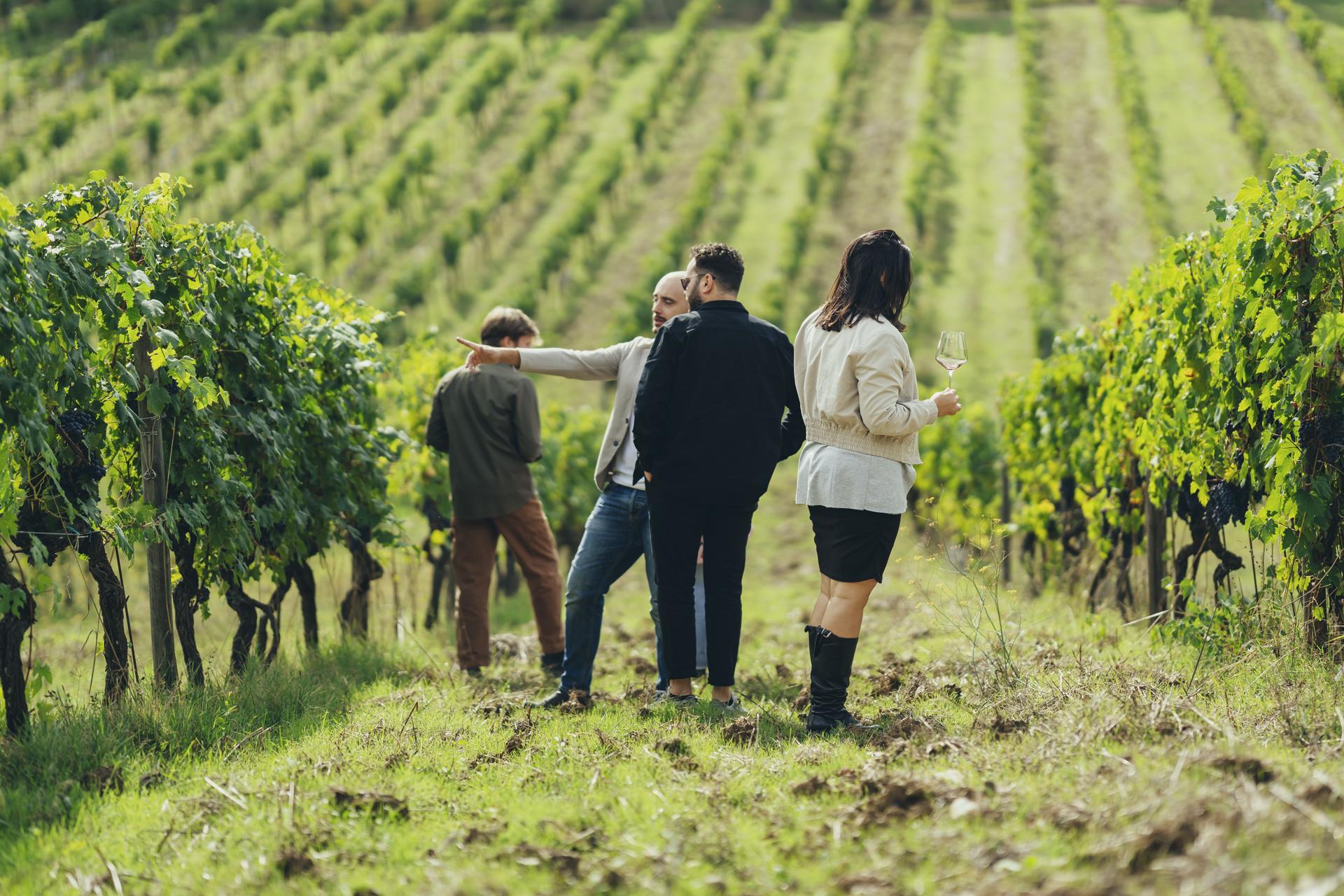
What matters more for your glass is how the Sangiovese grape behaves in the vineyard and the cellar. It is a variety with thin skins that ripens relatively late in the season, and it is sensitive to where it is planted: soil, altitude, and exposure to the sun all change the personality of the finished wine noticeably. This sensitivity is exactly why Sangiovese produces such different results across Tuscany, even though it is technically the same grape everywhere. Winemakers often refer to different “biotypes” or clones of Sangiovese, some more compact and with thicker skins than others, which is part of why regions like Montalcino and Montepulciano have developed their own distinct expressions of the variety over time. You can taste that sensitivity on our small group Full Day Chianti Tour, at three family run organic wineries in Chianti Classico.
What Does Sangiovese Taste Like?
So, what does Sangiovese taste like in the glass? The short answer: bright red fruit, firm structure, and an unmistakable savory edge.
Aromas and Flavors
Classic Sangiovese shows notes of sour cherry, red plum, and cranberry, often layered with dried herbs, a touch of leather, and sometimes a faint whiff of tomato leaf or dried tea. As the wine ages, particularly in styles built for cellaring, these fruit notes can deepen toward dried fig, balsamic, and tobacco.
Acidity and Tannins
Sangiovese is known for its naturally high acidity, which is one reason it pairs so beautifully with food, and for firm, sometimes grippy tannins, the compounds that create that slightly drying sensation on your gums and the sides of your tongue. Alcohol levels are usually moderate rather than heavy. The result is a wine that feels lively and made for the table rather than dense or jammy, which sets it apart from many international red varieties.
Where It Grows in Tuscany
Sangiovese thrives across a wide swath of central Tuscany, but three areas define its reputation. In the hills between Florence and Siena, the region of Chianti Classico sits on a mix of soils known locally as galestro (a crumbly, flaky marl) and alberese (a harder limestone), which contribute to the wine’s characteristic freshness and mineral edge. Further south, around the medieval town of Montalcino, warmer temperatures and different soil compositions produce riper, more structured Sangiovese, known locally as Brunello and historically as Sangiovese Grosso. Nearby, the hilltop town of Montepulciano grows its own clone, Prugnolo Gentile, on a patchwork of clay and sand.
If you want to see how much these landscapes shape the wine in the glass, our Tuscan wine guide walks through the region’s key growing areas in more detail. To see Montalcino and Montepulciano in person, our private tours go there with an English speaking local guide.
The Wines It Makes
Because Sangiovese adapts so readily to place, it forms the backbone of several of Italy’s most recognized wines, each with its own rules and character.
Chianti Classico
Produced in the historic heart of the Chianti region, Chianti Classico must be made with at least 80% Sangiovese, blended with other approved local or international varieties. It tends to show bright cherry fruit, herbal notes, and refreshing acidity. If you want to go deeper into how this wine is made and regulated, our Chianti Classico explained guide breaks it down step by step.
Brunello di Montalcino
Brunello di Montalcino is made from 100% Sangiovese and is one of Italy’s most celebrated wines, known for its power, structure, and ability to age for many years. It also requires a longer minimum aging period before release than most other Sangiovese wines, which adds to its depth and complexity. You can read more in our full Brunello di Montalcino guide.
Vino Nobile di Montepulciano
Vino Nobile di Montepulciano is built primarily around Prugnolo Gentile, the local Sangiovese clone, with a minimum requirement of 70% in the blend. It often sits stylistically between the brightness of Chianti and the power of Brunello, offering elegance with real backbone. Our guide to Vino Nobile di Montepulciano tells the rest of its story.
Sangiovese Wine and Food Pairings
Sangiovese’s high acidity and firm tannins make it a natural partner for Tuscan cuisine, and this is no accident: the wine and the food evolved together at the same tables for generations. Look for pairings with tomato sauces for pasta, where the wine’s acidity mirrors the tomato’s own; grilled and roasted meats, including the region’s famous bistecca alla fiorentina; wild boar ragù; and aged sheep’s milk cheeses like pecorino toscano. Earthy dishes built around mushrooms or Tuscany’s prized white and black truffles also find a natural match in Sangiovese’s savory, herbal side. For more ideas at the table, see our simple guide to Tuscan food and wine pairing.
Taste It Where It Was Born
Reading about Sangiovese is one thing; tasting it in the vineyards where it was shaped over centuries is another. If you would like to walk through Chianti’s hills, taste Brunello in Montalcino, or sit down to a truffle lunch paired with local Sangiovese, take a look at our wine tours and find the experience that fits you. Prefer to explore from home first? Our Wine Club ships a selection of wines from small family producers across Italy three times a year, so you can keep discovering Italian grapes at home before you even book a trip.
FAQ
What is Sangiovese wine?
Sangiovese is both the name of a red grape variety and shorthand for the wines made from it. It is the primary grape behind Chianti, Chianti Classico, Brunello di Montalcino, and Vino Nobile di Montepulciano, all produced in Tuscany.
Is Sangiovese a dry wine?
Yes. Wines made from Sangiovese, like Chianti, Brunello, and Vino Nobile, are dry red wines, meaning they have little to no residual sugar. Their fresh, tangy character comes from natural acidity rather than sweetness.
What is the difference between Sangiovese, Chianti, and Brunello?
Sangiovese is the grape variety itself. Chianti and Chianti Classico are wines made mostly from Sangiovese in the Chianti region, while Brunello di Montalcino is a wine made from 100% Sangiovese grown specifically around Montalcino, typically fuller in body and aged longer.
What food pairs well with Sangiovese?
Sangiovese pairs naturally with pasta in tomato sauce, grilled and roasted meats, bistecca alla fiorentina, wild boar ragù, aged pecorino cheese, and earthy mushroom or truffle dishes.
Where can I taste Sangiovese in Tuscany?
You can taste Sangiovese throughout Tuscany, from the hills of Chianti Classico to the cellars of Montalcino and Montepulciano. Joining a guided wine tour is one of the easiest ways to taste multiple styles side by side with local context from a knowledgeable guide.
