
Say “Montepulciano” to most people outside Italy, and they’ll picture a grape, not a place. That mix-up is exactly why Vino Nobile di Montepulciano deserves a proper introduction. This is a Tuscan red DOCG wine from the hilltop town of Montepulciano, southeast of Siena, made from Sangiovese, not the grape most people assume, and not the same wine as its similarly named cousin from Abruzzo. In this guide, we’ll clear up the confusion, walk through the grape behind the wine, explain its style and pairings, and share what to expect if you visit the town itself.
What Is Vino Nobile di Montepulciano?
Vino Nobile di Montepulciano is a DOCG red wine produced around the town of Montepulciano, in the province of Siena, on the eastern edge of Tuscany’s wine country. It’s one of Italy’s oldest recognized wines, with documented production going back centuries, and it was among the first wines in Italy to receive DOCG status, the country’s highest quality classification, in 1980.

As a montepulciano wine tuscany produces at real scale, it sits stylistically between the lighter, earlier-drinking Rosso di Montepulciano and the more powerful reds of Montalcino or Chianti Classico: structured and age-worthy, but generally a touch softer and more approachable in youth than Brunello. Our private Vino Nobile di Montepulciano wine tour picks you up at your accommodation and takes you to taste it in Montepulciano itself.
Not the Same as Montepulciano d’Abruzzo
This is the single most common point of confusion, and it’s worth explaining clearly. “Montepulciano” refers to two completely different things in the Italian wine world, and they happen to share a name almost by coincidence.
Two Different Wines
Vino Nobile di Montepulciano is named after the Tuscan town of Montepulciano, and it’s made primarily from Sangiovese. Montepulciano d’Abruzzo, on the other hand, is named after Montepulciano the grape variety, grown in the Abruzzo region on Italy’s Adriatic coast, a completely different part of the country, with no relation to the Tuscan town.
Why the Confusion Happens
The overlap in naming is a historical coincidence rather than any shared origin. The Montepulciano grape used in Abruzzo is not planted in any meaningful way around the Tuscan town of Montepulciano, and the two wines taste quite different: Montepulciano d’Abruzzo tends to be darker, fruitier, and softer, while Vino Nobile di Montepulciano has the brighter acidity and firmer tannins typical of Sangiovese.
The Sangiovese (Prugnolo Gentile) Roots of Vino Nobile di Montepulciano
By DOCG regulation, Vino Nobile di Montepulciano must contain at least 70% Sangiovese, and most producers use considerably more, often close to 100%. Locally, this Sangiovese clone is traditionally called Prugnolo Gentile, a name that reflects a slightly different character within the broader Sangiovese family: generally a touch more aromatic and softer in tannin than the Sangiovese grown in Montalcino or Chianti.
If you’d like to see how the same grape changes from one part of Tuscany to another, our guide to Brunello di Montalcino covers its most powerful expression, a few hills away. Prugnolo Gentile is really Sangiovese adapted to Montepulciano’s own soils and microclimate rather than a separate variety.
Discover the private Vino Nobile tour
Style and Pairing
A typical nobile wine shows red cherry and plum fruit, savory herbal notes, and the firm but not aggressive tannins characteristic of Sangiovese, often with a touch more roundness than Chianti Classico thanks to slightly warmer growing conditions and, in many cases, a small portion of other approved red varieties in the blend. Riserva versions, which require longer aging, tend to add deeper notes of dried fruit, leather, and spice.
On the table, Vino Nobile di Montepulciano pairs naturally with the same hearty Tuscan cooking that suits most Sangiovese-based reds: grilled meats, wild boar ragù, aged pecorino from the nearby Val d’Orcia, and mushroom or truffle dishes in season. If you visit on one of our private wine tours, lunch can be added on request.
Visiting Montepulciano
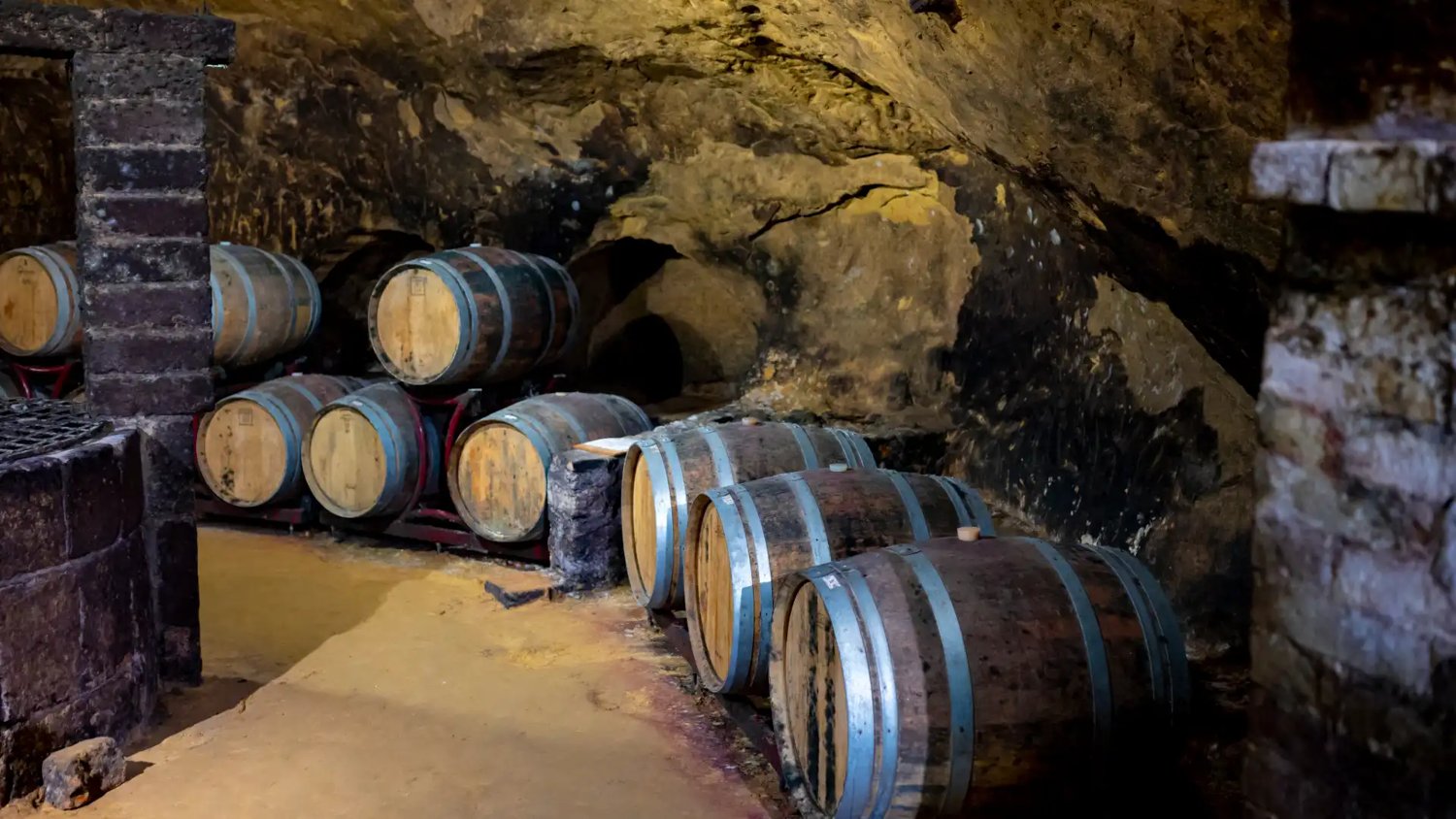
Montepulciano itself is one of the most striking hill towns in southern Tuscany, with a historic center perched above the Val di Chiana and views stretching toward Montalcino on a clear day. Many of the town’s oldest wine cellars are cut directly into the tufo rock beneath the streets, a detail that makes a cellar visit here feel genuinely different from tastings elsewhere in Tuscany.
The area sits close enough to Montalcino and the Val d’Orcia to combine comfortably in a single day trip, which is part of why it’s a popular stop for visitors exploring southern Tuscany’s wine country. For a wider view of how Montepulciano fits alongside the region’s other wine areas, our complete guide to Tuscan wine is a useful place to start planning.
Bring Vino Nobile di Montepulciano Home
If a day trip isn’t in the cards right now, you don’t have to wait to taste something new: our Wine Club ships wines from small family producers across Italy three times a year, and Tuscan reds like Vino Nobile can be part of the selection. And when you are ready to see the region in person, our private tours can be tailored to include Montepulciano’s cellars and countryside alongside neighboring Montalcino.

Plan your private Montepulciano tour
FAQ
Is Vino Nobile di Montepulciano the same as Montepulciano d’Abruzzo?
No. They share a name by coincidence. Vino Nobile di Montepulciano is a Sangiovese-based DOCG wine from a Tuscan hill town, while Montepulciano d’Abruzzo is made from the Montepulciano grape in the Abruzzo region.
What grape is used to make Vino Nobile di Montepulciano?
Primarily Sangiovese, locally known as Prugnolo Gentile, which must make up at least 70% of the blend by DOCG law.
Is Vino Nobile di Montepulciano similar to Chianti Classico or Brunello?
It’s a relative of both, since all three are largely or entirely Sangiovese. Vino Nobile tends to sit between the two in style: generally softer than Brunello, with a bit more roundness than typical Chianti Classico.
When did Vino Nobile di Montepulciano receive DOCG status?
In 1980, making it one of the first Italian wines to reach the country’s top quality classification.
Can I visit wine cellars in the town of Montepulciano?
Yes, many historic cellars are carved into the tufo rock beneath the town center and are open for tastings, often combinable with a visit to nearby Montalcino.
