
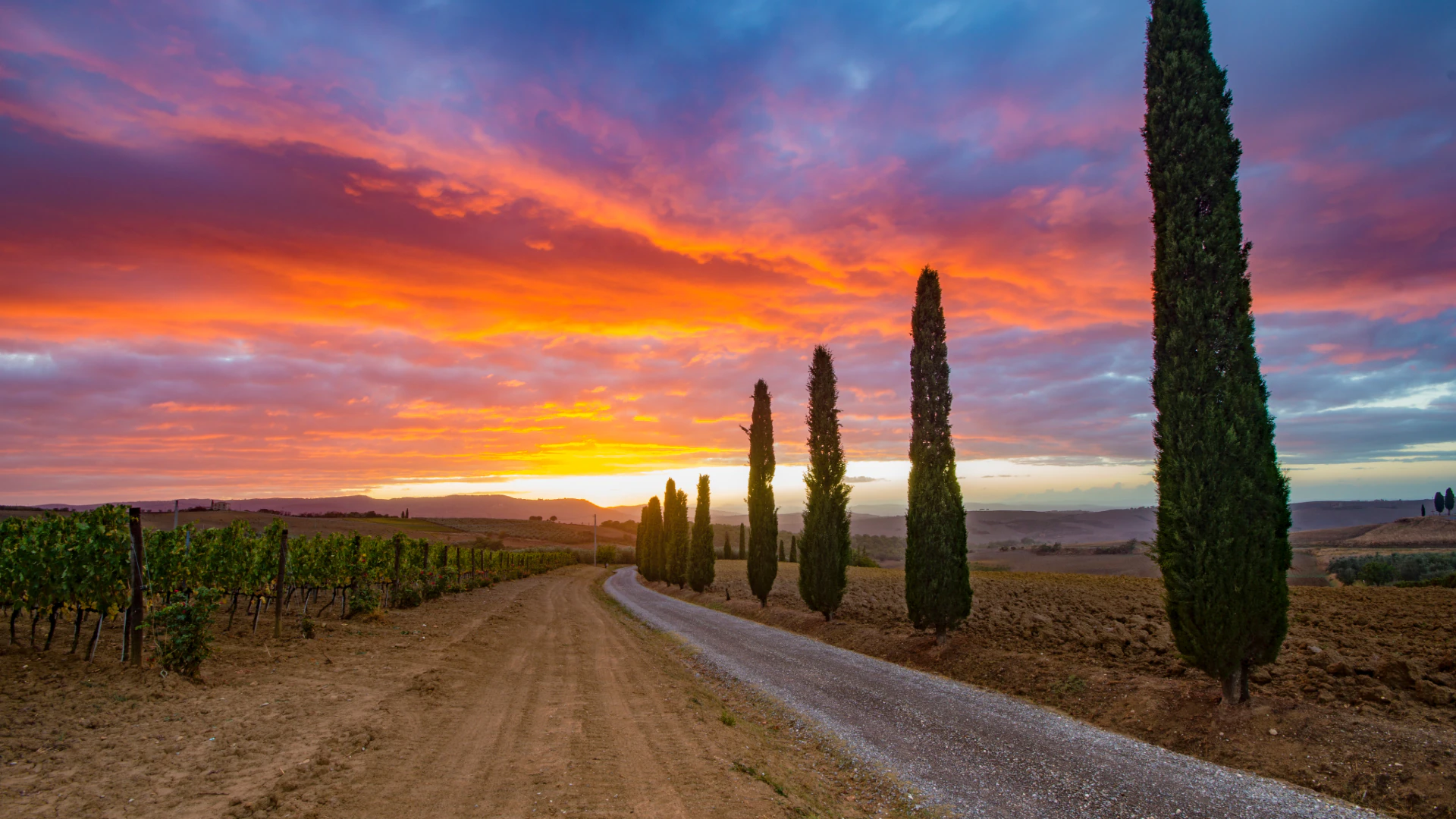
If you’ve ever sipped a glass of Chianti on a sun-warmed terrace, you already know why Tuscan wine has captivated drinkers for centuries. From the rolling hills south of Florence to the Tyrrhenian coast, Tuscany produces some of Italy’s most celebrated reds, alongside crisp whites and sweet dessert wines that rarely leave the region. This guide breaks down the grapes, regions, and styles you need to know to understand the wines of Tuscany, whether you’re planning a trip or simply want to order with confidence at dinner.
Why Tuscan Wine Is Different
Tuscany isn’t a single wine region: it’s a patchwork of dozens of smaller zones, each shaped by its own soil, elevation, and microclimate. What ties them together is Sangiovese, the thin-skinned red grape that forms the backbone of nearly every serious Tuscan red. Sangiovese is prized for its bright acidity, firm tannins (the natural compounds that give red wine its dry, gripping texture), and notes of cherry, dried herbs, and leather. Depending on where it’s grown and how it’s blended, Sangiovese can taste rustic and food-friendly or polished and age-worthy.
The Main Tuscan Wine Regions
Understanding Tuscan wine regions is the fastest way to understand the wines themselves, since Italian wine laws (the DOC and DOCG classifications, which regulate where and how a wine can be made) are tied directly to geography.
Chianti and Chianti Classico
Chianti is the most recognizable name in Tuscan wine, but it covers a huge area. At its historic heart lies Chianti Classico, marked by the black rooster (Gallo Nero) symbol, where Sangiovese must make up at least 80% of the blend. Wines here range from juicy and approachable to structured and cellar-worthy, depending on the producer and subzone. Our small group Full Day Chianti Tour spends a day here, visiting three family run organic wineries with lunch at one of them.
Montalcino and Brunello
South of Siena, the town of Montalcino is home to Brunello di Montalcino, made from 100% Sangiovese grown in warmer, drier conditions. The result is a fuller-bodied, more powerful wine that typically needs, and rewards, several years of aging.
Montepulciano and Vino Nobile
Not to be confused with the Montepulciano grape from Abruzzo, this hilltop town produces Vino Nobile di Montepulciano, another Sangiovese-based DOCG wine that sits stylistically between Chianti Classico and Brunello: rich but still elegant.
The Maremma and Bolgheri
Along the Tuscan coast, the Maremma area, and Bolgheri in particular, became famous in the late 20th century for the so-called “Super Tuscans”: wines that blend Sangiovese with international grapes like Cabernet Sauvignon and Merlot, breaking from traditional rules to create bold, internationally styled reds.
We cover each of these areas in depth, including where to taste and what to look for on the label, in our regional guides: start with our complete guide to Chianti Classico or our guide to Brunello di Montalcino.
Book the Full Day Chianti Tour
Grapes Beyond Sangiovese
While Sangiovese dominates, it isn’t the whole story. Vernaccia di San Gimignano is a crisp, mineral white grown around the medieval towers of San Gimignano. Trebbiano and Malvasia are traditional white grapes often used in Vin Santo, Tuscany’s amber-colored dessert wine, typically made by drying grapes before pressing to concentrate their sugars. Canaiolo and Colorino are older local varieties still used in small amounts to soften and color Sangiovese-based blends.
Understanding Tuscan Wine Styles
Everyday Reds
Simple Chianti DOCG and other Sangiovese blends are made for the table: light-to-medium bodied, high in acidity, and built to pair with tomato sauces, grilled meats, and cured salumi.
Structured, Age-Worthy Reds
Brunello di Montalcino, Chianti Classico Gran Selezione (the top tier of Chianti Classico, aged longer and made from the best vineyard sites), and Vino Nobile fall into this category. These wines benefit from decanting and often improve for a decade or more in the bottle. To taste them where they are made, our private tours go to Montalcino and Montepulciano with a local guide.
Super Tuscans
These IGT-labeled wines (Indicazione Geografica Tipica, a category that allows more flexibility than DOC/DOCG rules) blend Sangiovese with grapes like Cabernet Sauvignon, Merlot, or Syrah, or sometimes skip Sangiovese altogether, producing rich, internationally styled reds.
Whites and Dessert Wines
Vernaccia di San Gimignano offers a refreshing alternative to Tuscany’s reds, while Vin Santo, often served with cantucci (almond biscuits) for dipping, closes out a Tuscan meal.
What Are the Best Wines from Tuscany?
There’s no single answer to which are the best wines from Tuscany: it depends on the occasion. For everyday drinking, look for a Chianti Classico DOCG. For a special dinner, a Brunello di Montalcino or Vino Nobile di Montepulciano Riserva rarely disappoints. If you prefer bolder, fruit-forward reds, seek out a Bolgheri Super Tuscan: our guide to Super Tuscan wines explains where those bolder styles come from and how they differ from Tuscany’s traditional bottles.
Tasting Tuscan Wine the Right Way
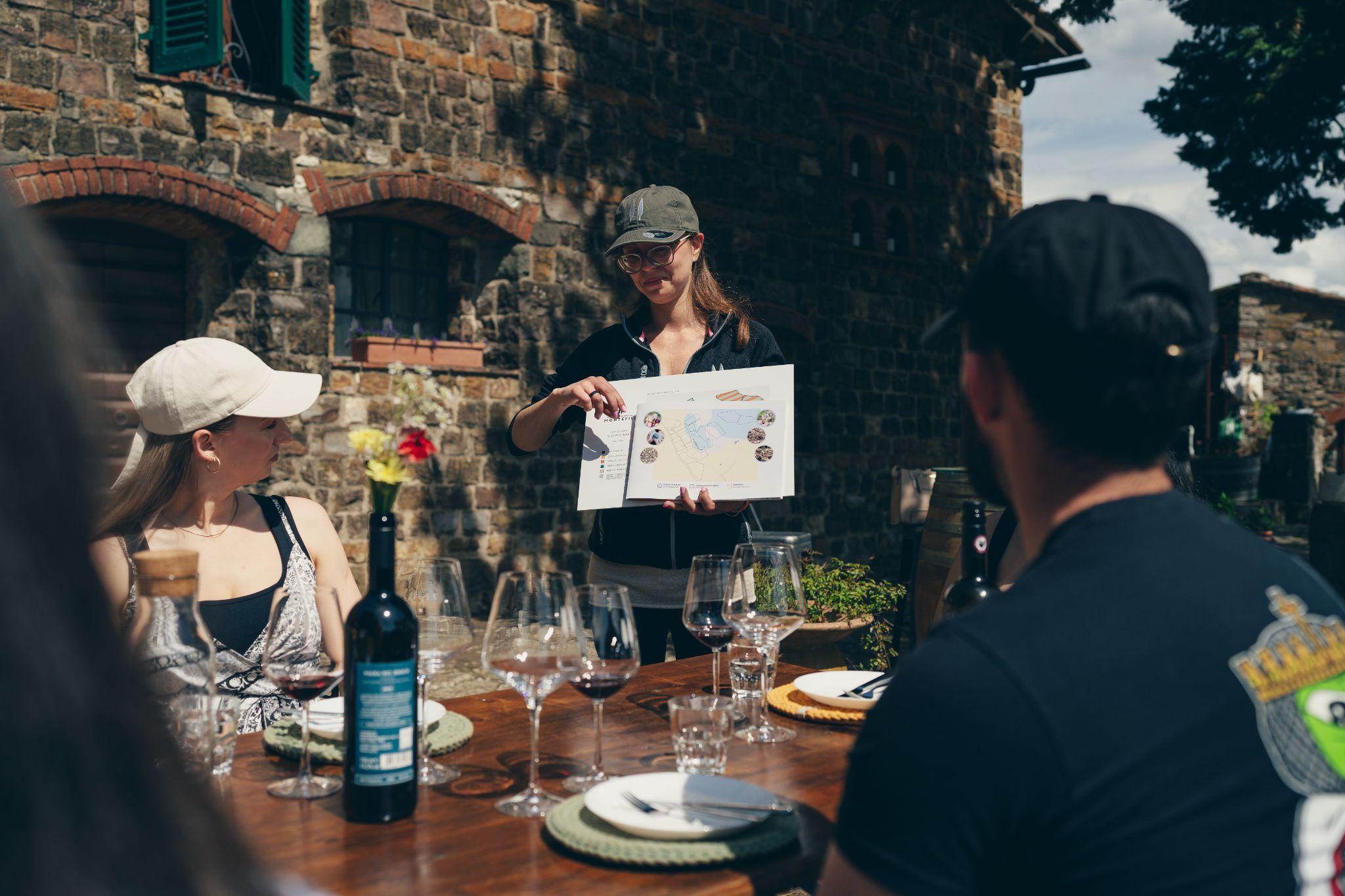
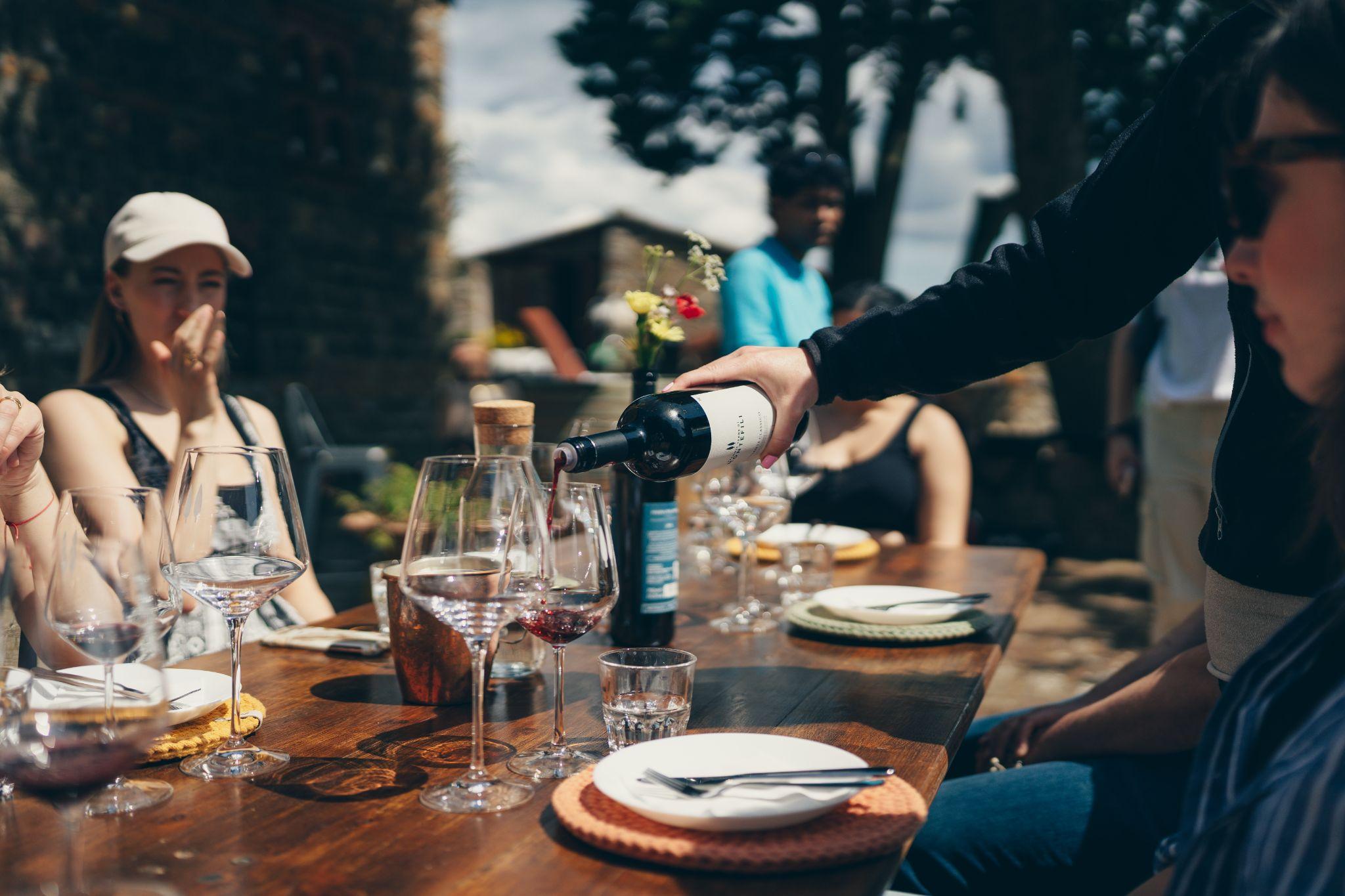
Reading about Tuscan wine only goes so far: the best way to understand these wines is in the vineyard, glass in hand, talking with the people who make them. Tasting side by side lets you feel the real differences between a young Chianti and an aged Brunello, and understand why terroir (the combination of soil, climate, and tradition that shapes a wine’s character) matters so much here.
Plan Your Tuscan Wine Experience
Ready to taste it all for yourself? Join one of our small-group or private wine tours from Florence and visit family-run cellars across Chianti, Montalcino, and beyond with a local guide. Prefer to explore from home first? Our Wine Club delivers a curated selection of wines from small family producers across Italy, Tuscany included, straight to your door, so you can keep tasting before or after your trip.
FAQ
What is the most famous Tuscan wine?
Chianti is the most widely known, but Brunello di Montalcino is often considered Tuscany’s most prestigious wine.
What grape is used in most Tuscan wine?
Sangiovese is the dominant red grape across nearly all of Tuscany’s major wine regions.
What is a Super Tuscan wine?
A Super Tuscan is a red wine, often labeled IGT, that blends Sangiovese with international grapes like Cabernet Sauvignon or Merlot, or uses those grapes alone, outside the traditional DOC/DOCG rules.
Is Tuscan wine mostly red or white?
Tuscany is best known for red wine, though it also produces notable whites like Vernaccia di San Gimignano and the dessert wine Vin Santo.
What’s the difference between Chianti and Chianti Classico?
Chianti Classico comes from the smaller, historic zone at the heart of the larger Chianti area and follows stricter production rules, including a minimum 80% Sangiovese.
