
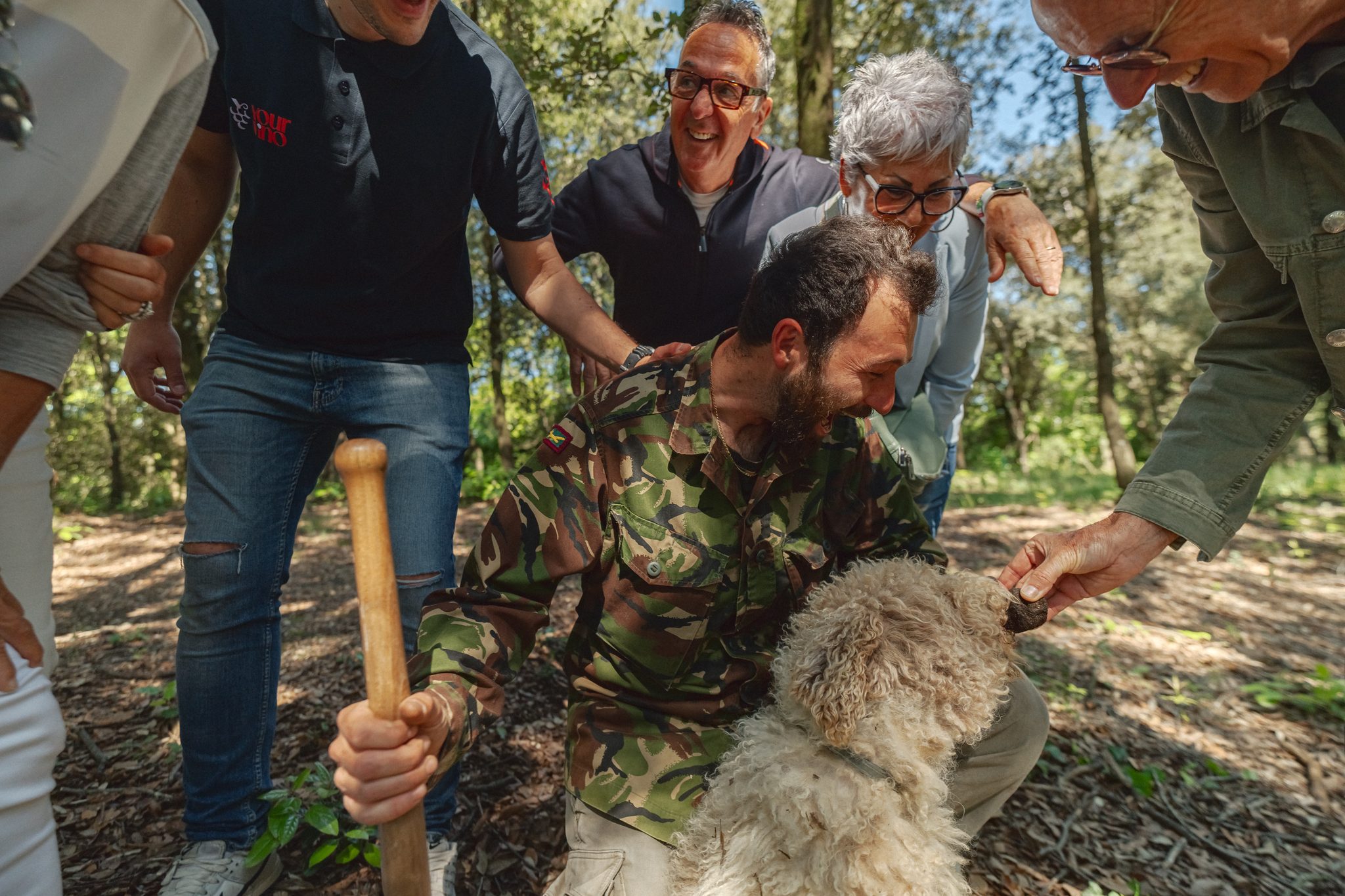
If you’ve ever stood in front of a Tuscan menu wondering whether to order the dish “shaved with white truffle” or the one “with black truffle sauce,” you’re not alone. The white vs black truffle question comes up constantly, and the honest answer is: they’re two very different ingredients, with different seasons, different aromas, and very different price tags. Understanding the difference is the best way to know what you’re actually paying for and what to look for on your plate.
White vs Black Truffle: The Short Answer
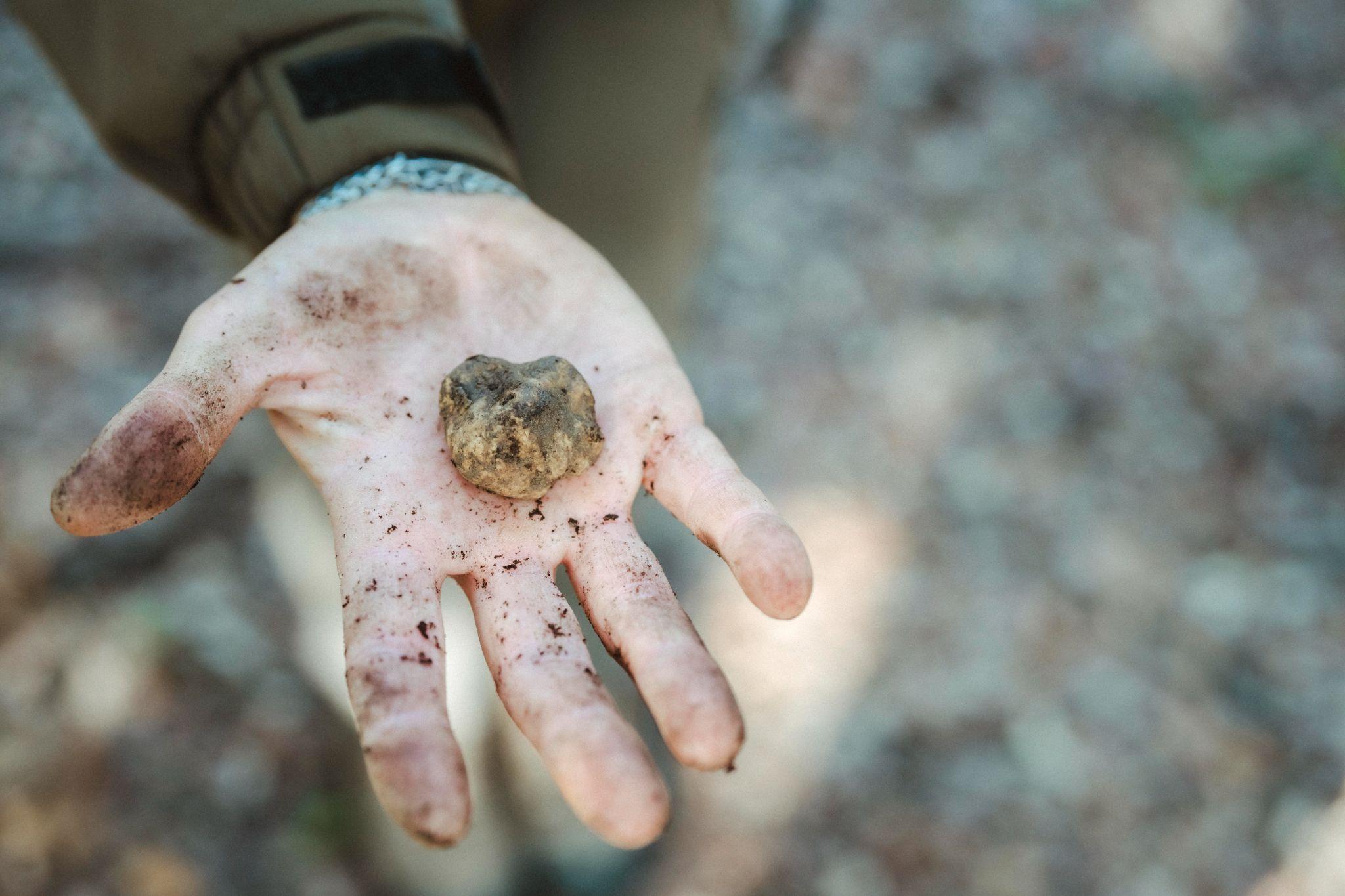
In short, the white truffle (Tuber magnatum Pico) is the rarer, more pungent, and more expensive of the two, available only for a few months in autumn. The black truffle (Tuber melanosporum) has a milder, earthier flavor, a longer season, and a friendlier price. Both are among the most sought after types of truffle in Italy, and both grow wild in the woods of Tuscany, tied to the roots of specific trees like oak, hazel, and poplar. You can walk those woods yourself on a truffle hunt from Florence with Leonardo and his dog Aiki.
White truffle: season and aroma
The white truffle is a true autumn specialty. In Tuscany its season typically runs from October to December, peaking in late October and November, which is exactly why so many food lovers plan their trip to Tuscany around these months. If you want to see how these truffles are actually found in the wild, our guide to truffle hunting in Tuscany explains how hunters and their trained dogs work the woods.
In aroma, white truffle is intense, almost aggressive in the best way: garlicky, slightly cheesy, with notes of fresh hay and, some say, a whisper of gasoline. It’s never cooked, since heat destroys its aroma almost instantly, which is why it’s always shaved raw, at the very last moment, directly over the dish.
Black truffle: season and aroma
The black truffle, or Tuber melanosporum, has a different rhythm. Its main season runs through the winter, roughly from mid November to mid March, which makes it the star of Tuscan kitchens as the white truffle season ends. There’s also a milder, less prized summer black truffle (Tuber aestivum, or scorzone) found from June through the summer, but when people talk about “black truffle” in a fine dining sense, they usually mean the winter variety. For a deeper look at what grows when, check our full guide to truffle season in Tuscany.
Compared to its white cousin, black truffle aroma is softer and more approachable: earthy, woodsy, with hints of dark chocolate and cooked mushroom. It also holds up well to heat, which opens up a whole different world in the kitchen.
Why white truffle costs more
This is the part that surprises most visitors. Even though both grow wild, white truffle can command several times the price of black truffle in the same season. There are a few real reasons for this, not marketing hype:
It is almost impossible to cultivate
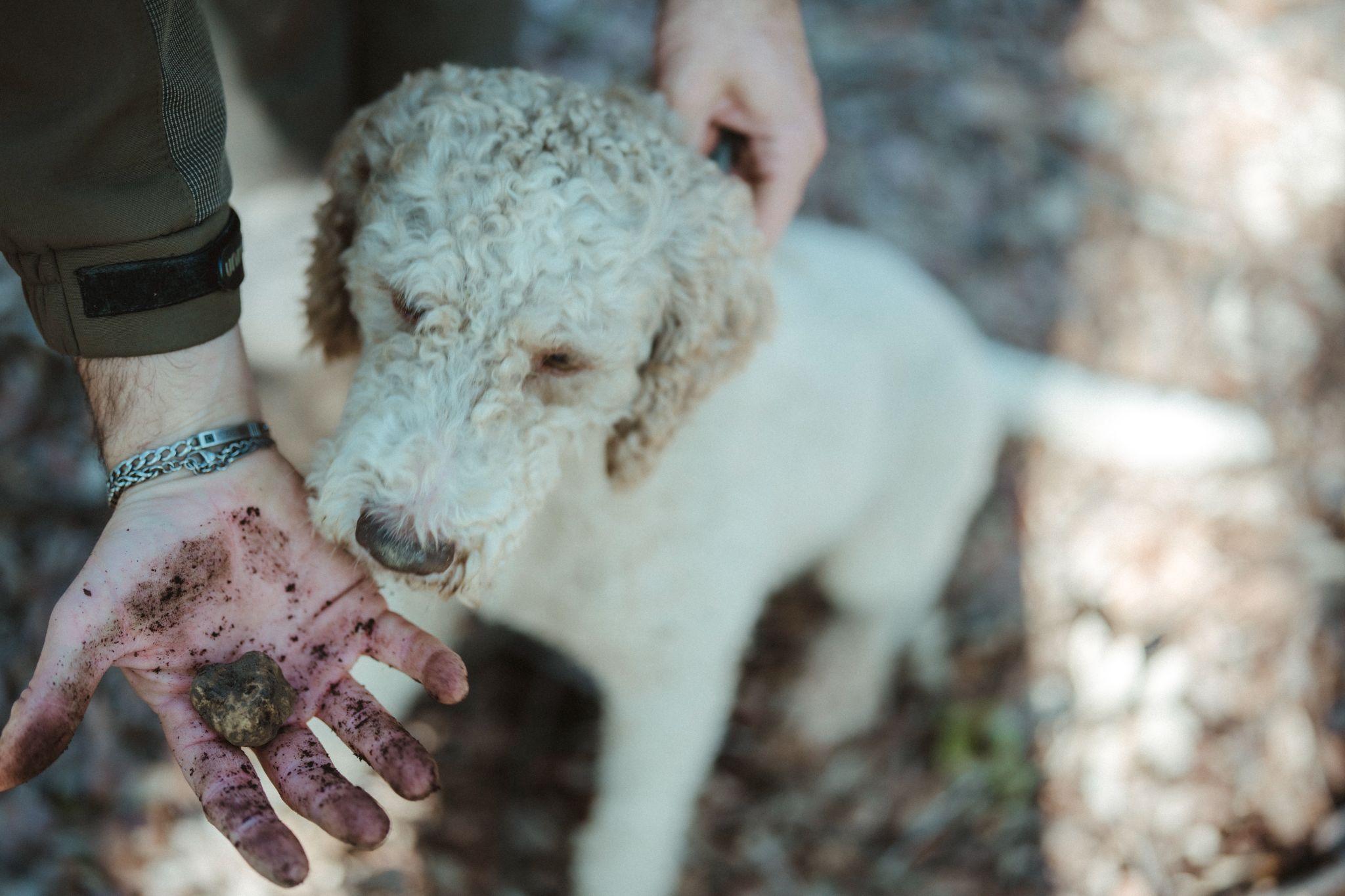
Black truffle can be grown, with real success, in dedicated truffle orchards (“tartufaie”) planted with inoculated tree saplings. White truffle, on the other hand, has never been reliably cultivated. Practically every one sold comes from the wild, which naturally limits supply.
Its season is shorter and its habitat pickier
White truffle only forms in specific soil and climate conditions, tied closely to certain river valleys and forest types in central and northern Italy. Fewer suitable spots, plus a shorter window to harvest, mean less product on the market.
Demand is global
Restaurants from Tokyo to New York fly in fresh white truffle every autumn, and that international demand pushes prices up fast, especially in the first weeks of the season.
How to taste both
The best way to actually understand white truffle vs black truffle isn’t reading about it. It’s tasting them, ideally side by side. On our truffle hunting tour from Florence, the truffles found in the woods that morning end up on handmade fresh pasta at lunch, and which truffle you taste depends on the season. As for the glass, earthy reds like Chianti Classico suit black truffle, while fresh white truffle calls for a structured white or an elegant red with gentle tannins and good acidity. Our guide to truffle and wine pairing goes into the details.
A good tip if you’re tasting on your own: start with black truffle, then move to white. Going the other way around, the white truffle’s intensity will flatten everything that follows.
In the kitchen
Black truffle’s ability to handle heat makes it far more versatile in cooking. It’s simmered into sauces, infused into oils and butters, layered into stuffed pasta, and even baked into bread. Its flavor deepens and mellows with cooking, which is part of its appeal.
White truffle asks for the opposite approach: simplicity. It’s shaved raw over fresh egg tagliatelle, a soft fried egg, risotto, or a plain slice of good bread with butter, dishes designed to be a blank canvas, letting the truffle do all the talking. This is also why, in Tuscan trattorias, you’ll often see the price of a dish listed separately from the “truffle supplement,” calculated by weight.
White vs Black Truffle: Final Thoughts
Neither truffle is “better” than the other: they simply belong to different moments of the year and different roles at the table. Black truffle is the generous winter ingredient you can cook with; white truffle is the rare luxury that comes once a year, in autumn. Both are proof of how much flavor Tuscany’s forests can produce, without a single vine or olive tree involved.
Ready to taste the difference for yourself? Join our truffle experience with fresh pasta lunch, wine and a San Gimignano walk and discover why Tuscany remains one of the best places in the world to eat real truffle, the way locals do. If you’re staying in the city, here’s what a day of truffle hunting near Florence looks like.
FAQ
What is the main difference between white truffle and black truffle?
White truffle (Tuber magnatum Pico) has a stronger, more pungent aroma, a short autumn season, and a much higher price. Black truffle (Tuber melanosporum) is milder, available mostly in winter, and more affordable, partly because it can be cultivated.
Which is more expensive, white or black truffle?
White truffle is almost always more expensive, often several times the price of black truffle, because it cannot be reliably cultivated and grows only in specific, limited conditions.
When is truffle season in Tuscany?
White truffle season generally runs from October to December, recently extended into the first half of January. The winter black truffle is typically found from mid November to mid March, with the milder summer black truffle available from June through the summer.
Can you cook white truffle like black truffle?
Not really. White truffle loses most of its aroma when heated, so it’s always shaved raw at the end of a dish. Black truffle handles cooking well and is often used in sauces, oils, and baked dishes.
What wine pairs best with truffle?
It depends on the truffle: black truffle pairs well with earthy, medium bodied reds such as Chianti Classico, while white truffle calls for a structured white or an elegant red with gentle tannins and good acidity.
