
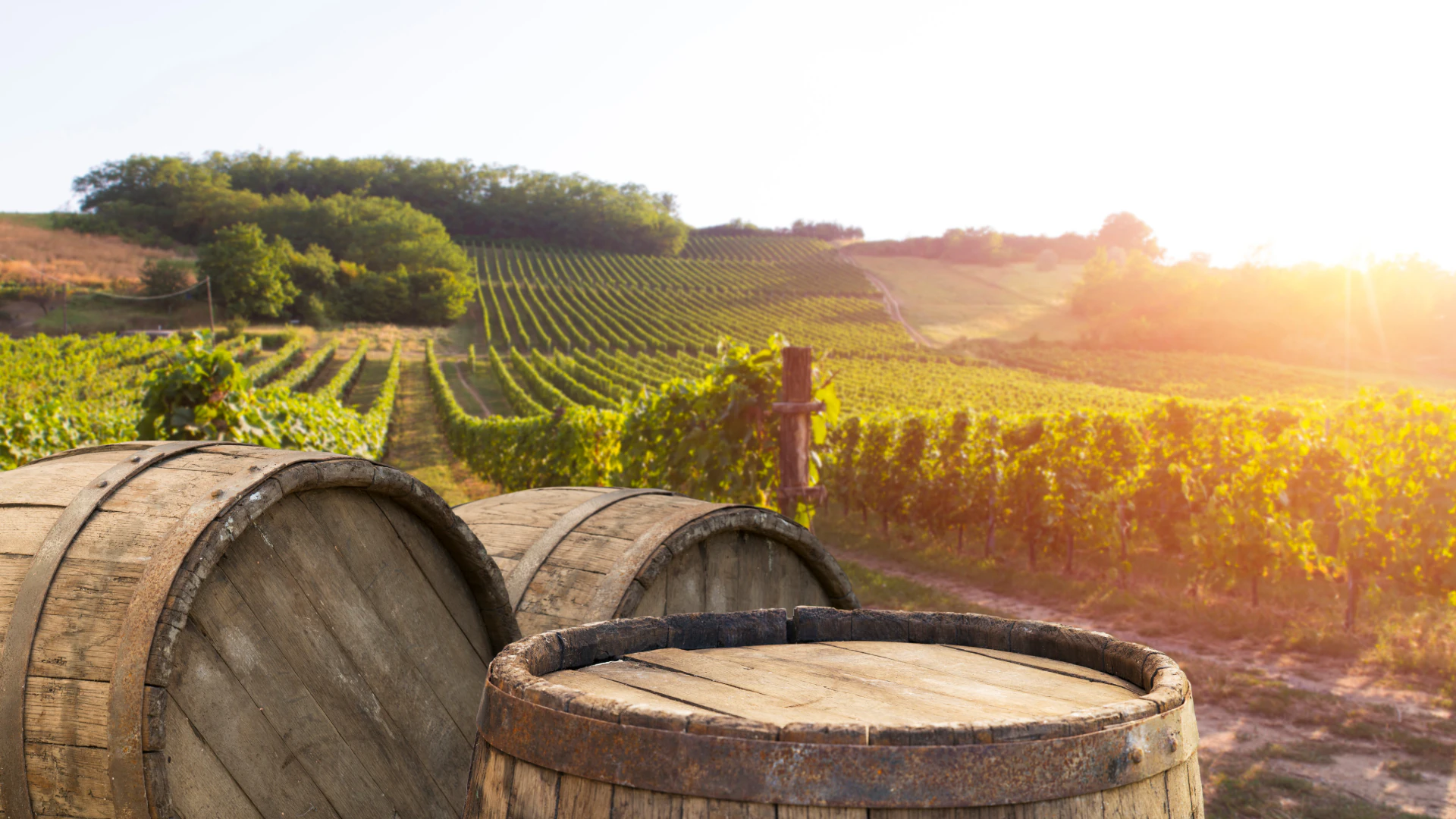
Ask any wine lover for a handful of famous Italian names, and Super Tuscan wines almost always make the list. These are Tuscan reds that don’t fit neatly into the region’s traditional rulebook, and yet they’re some of the most sought-after, expensive, and internationally recognized wines Italy produces. Their story isn’t really about marketing: it’s about a small group of producers who, decades ago, decided the official rules were holding back what Tuscany could actually achieve, and made wine outside the system instead.
What Is a Super Tuscan?
If you’re wondering what is a Super Tuscan, the short answer is: it’s not an official wine category at all. “Super Tuscan” is an informal term, coined by the wine press, for high-quality red wines from Tuscany that don’t follow the traditional grape and production rules of denominations like Chianti or Chianti Classico.

Many Super Tuscans use grapes that weren’t historically permitted or emphasized in Tuscany’s classic blends, most notably Cabernet Sauvignon, Merlot, and Cabernet Franc, sometimes on their own, sometimes blended with Sangiovese. Because they fell outside the strict DOC and DOCG rules of the time, these wines were originally labeled simply as Vino da Tavola (table wine), Italy’s most basic classification, despite often being priced and made like the country’s finest reds. Our truffle hunting and wine tour includes one: the family winery we visit pours a Super Tuscan among its five wines.
How Super Tuscan Wines Broke the Rules
To understand why this was such a big deal, it helps to remember how strict Italian wine law used to be. Denominations like Chianti historically dictated not just where grapes could be grown, but which varieties had to be used and in what proportions. A producer who wanted to make a wine that was, say, 100% Sangiovese, or a Bordeaux-style blend with Cabernet Sauvignon, simply couldn’t call it Chianti, no matter how good it was.
A Deliberate Departure
Starting in the 1970s, a handful of producers decided to make the wine they believed the land could produce, rules or no rules. They planted international varieties, aged wine in French barrique instead of the traditional large Slavonian oak casks, and released the results as humble “table wine”, a technical downgrade that had nothing to do with quality.
The Market Reacts
What happened next surprised almost everyone. Critics and collectors recognized the quality immediately, prices climbed, and demand for these unconventional wines eventually forced Italian wine law itself to adapt. In 1992, the introduction of the IGT (Indicazione Geografica Tipica) classification gave these wines a home that reflected their quality without forcing them into the old rulebook. Today, most Super Tuscans carry the Toscana IGT designation.
The Famous Names: Sassicaia and Tignanello
Two wines are usually credited with starting this movement, and both are still benchmark names today.
Sassicaia
Sassicaia, made on the Tenuta San Guido estate near Bolgheri on the Tuscan coast, is widely considered the wine that started it all. Made primarily from Cabernet Sauvignon, it was first produced for the family’s own consumption before being released commercially in the early 1970s. Its success helped put the entire Bolgheri area on the international wine map and eventually earned it its own dedicated DOC, Bolgheri Sassicaia, a rare case of a single estate having its own denomination.
Tignanello
Tignanello, produced by the Antinori family in Chianti Classico territory, took a different approach: a Sangiovese-based blend with Cabernet Sauvignon and Cabernet Franc, aged in small French oak barrels rather than traditional large casks. First released in the mid-1970s, it showed that Sangiovese itself, when treated with the same ambition as Bordeaux’s great grapes, could produce something equally serious. If you want to see how the same grape performs inside the traditional rules, our guide to Chianti Classico is a good next stop. Our small group Full Day Chianti Tour spends the day in those same Chianti Classico hills, at three family run organic wineries.
Book the Full Day Chianti Tour
How Super Tuscan Wines Taste
Because the category covers such a range of blends, styles vary more than with a traditional denomination like Chianti Classico. That said, most Super Tuscans share a family resemblance: concentrated dark fruit, a fuller body than classic Sangiovese-only wines, noticeable but well-integrated tannins from barrique aging, and often a layer of vanilla, spice, or toasted oak from time in French barrels.
Cabernet-driven examples like Sassicaia tend to show blackcurrant, graphite, and herbal notes typical of the variety. Sangiovese-based blends like Tignanello keep more of that grape’s characteristic red-fruit brightness and acidity, wrapped in a richer, more polished structure than traditional Chianti. In general, expect a wine built for aging, with the weight and complexity to stand alongside Bordeaux or Napa Cabernet in a blind tasting.
How to Taste Super Tuscans in Tuscany
Many of the most celebrated Super Tuscans come from specific pockets of Tuscany, particularly the Bolgheri coast and the hills of Chianti Classico, which makes tasting them on location especially rewarding: you get to see the landscape that shaped the decision to break from tradition in the first place. For context on how these areas fit into the wider region, our complete guide to Tuscan wine is a useful starting point before you visit.
Availability varies by estate: some Super Tuscan producers welcome visitors and offer tastings by appointment, while the most famous names can be harder to access directly and are often easier to taste through a curated selection or a guided visit to the region.
Taste the Icons for Yourself
Reading about Sassicaia and Tignanello is one thing: tasting a Super Tuscan alongside the story of how it came to exist is a completely different experience. Explore our wine tours to find a day among the hills of Chianti Classico, where Tignanello was born and many estates still pour their own Super Tuscans.
FAQ
What is a Super Tuscan, exactly?
It’s an informal term for high-quality Tuscan red wines that don’t follow traditional denomination rules, often made with international grapes like Cabernet Sauvignon or Merlot, alone or blended with Sangiovese.
Is Super Tuscan an official wine classification?
Not on its own. Most Super Tuscans are officially classified as Toscana IGT, a category introduced in 1992 that gave these wines a proper legal home.
What’s the difference between Sassicaia and Tignanello?
Sassicaia, from the Bolgheri coast, is primarily Cabernet Sauvignon. Tignanello, from Chianti Classico territory, is a Sangiovese-based blend with Cabernet Sauvignon and Cabernet Franc.
Why were Super Tuscans originally labeled as table wine?
Because they didn’t follow the grape and production rules of Tuscany’s official denominations at the time, Italian law classified them at the most basic level, Vino da Tavola, regardless of their quality.
Can I visit the estates that make Super Tuscans?
Some do welcome visitors by appointment, particularly around Bolgheri and Chianti Classico, though access to the most famous names can be limited, and a guided tour is often the easiest way to taste them.
