
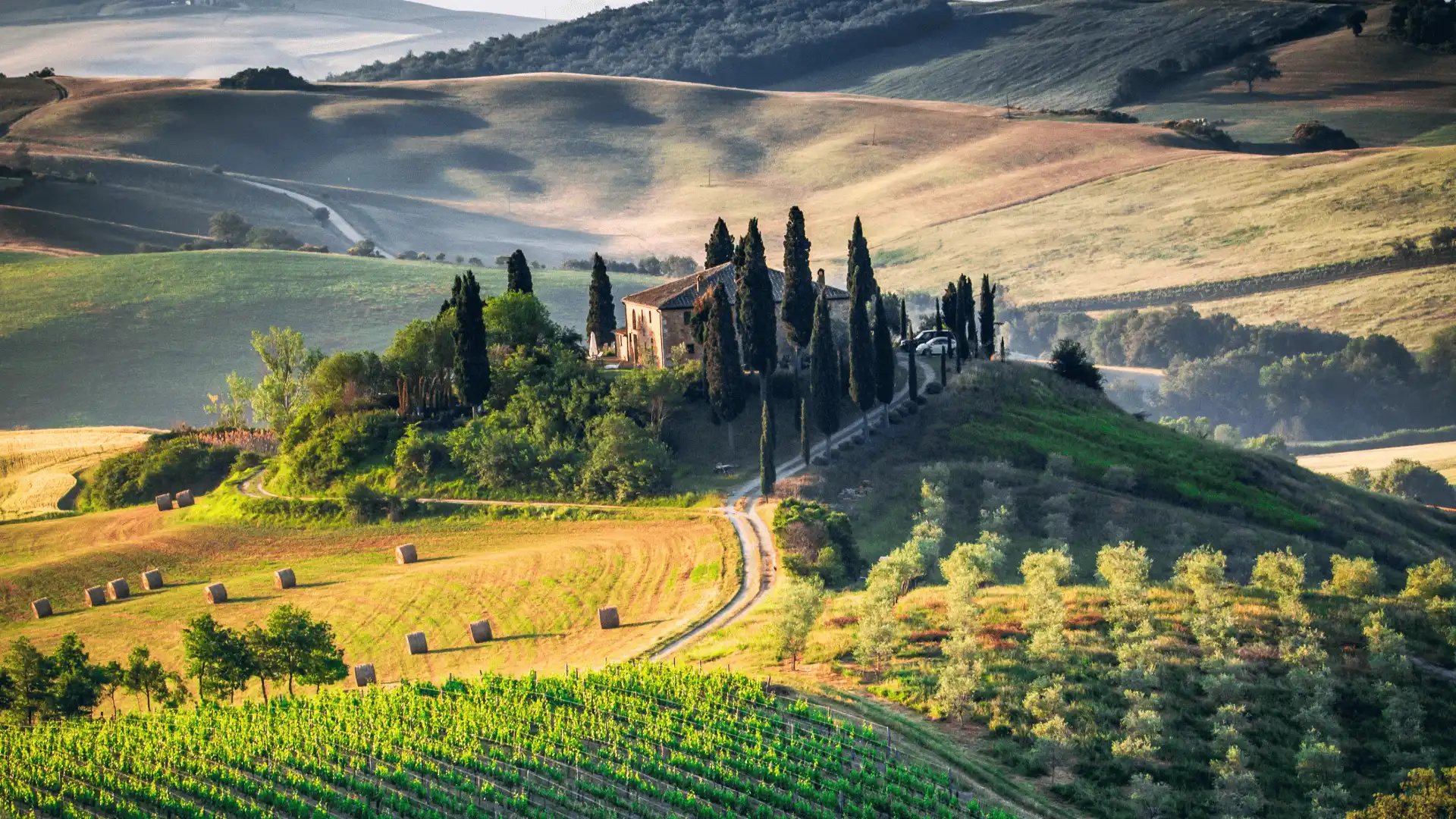
Few Italian wines carry the reputation of Brunello di Montalcino. Produced exclusively around the hilltop town of Montalcino, south of Siena, this is one of Tuscany’s most structured, age-worthy reds, and one of the most misunderstood by first-time visitors. In this guide, we’ll explain what Brunello actually is, how it differs from its younger sibling Rosso di Montalcino, the aging rules that shape its style, what to expect in the glass, and how to plan a visit to the town itself.
What Is Brunello di Montalcino?
Brunello di Montalcino is a DOCG red wine made from 100% Sangiovese, grown only within the municipality of Montalcino. Locally, this particular strain of Sangiovese is historically called “Brunello,” meaning “little dark one,” a reference to the deep color of the grape skins. If you want to see how the same grape behaves further north, our guide to Chianti Classico covers its character in the hills between Florence and Siena.
What sets this montalcino wine apart from Sangiovese grown elsewhere is the environment: Montalcino sits at higher elevation than most of Tuscany’s wine country, further from the coast, with a warmer, drier, more Mediterranean climate than Chianti. That combination of heat, altitude, and well-draining soils produces grapes with thicker skins and more concentration, which translates into a wine with real weight, firm tannins, and strong aging potential. Our private Brunello di Montalcino wine tour picks you up at your accommodation and brings you to taste it among these hills.
Brunello vs Rosso di Montalcino: What’s the Difference?
Almost every producer in Montalcino makes two wines from the same Sangiovese vineyards: Brunello di Montalcino and Rosso di Montalcino. Understanding brunello vs rosso di montalcino is really about understanding what happens after the harvest, not what happens in the vineyard.
Same Grape, Different Path
Both wines come from Sangiovese grown in the same DOCG zone. The difference lies in the winemaker’s selection and the aging process that follows. Rosso di Montalcino is the more approachable, earlier-drinking version: it’s released the year after harvest, with far shorter aging requirements, and it’s meant to be enjoyed young.
Style and Occasion
Brunello wine is the more serious, long-aged expression, built for the cellar as much as the table. Rosso di Montalcino, by contrast, is fresher, lighter on its feet, and often more affordable, making it the wine locals actually drink on a Tuesday night. Many producers treat Rosso almost as a “second wine,” made either from slightly younger vines or from Brunello lots not selected for the longer aging path.
The Aging Rules for Brunello di Montalcino
The DOCG regulations are strict, and they’re a big part of why Brunello has such a distinctive character. By law, Brunello di Montalcino must age for a minimum of five years before release, counting from January 1st following the harvest. Of that period, at least two years must be spent in oak barrels, with further time resting in the bottle before the wine reaches the market.
Riserva
A Riserva designation requires even longer aging: a minimum of six years total, again with at least two years in oak. Riserva wines typically come from the producer’s best parcels or vintages and are made in smaller quantities.
Why It Matters
This extended aging softens Brunello’s naturally high tannins and allows the wine’s aromas to evolve from primary red fruit toward more complex notes of dried herbs, leather, and tobacco. It’s also why a young Brunello, fresh off release, can still feel tightly wound: the wine is often built to keep improving for a decade or more.
Discover the private Brunello tour
What Does Brunello di Montalcino Taste Like?
A well-made Brunello tends to show ripe cherry and plum fruit backed by firmer structure than most Chianti: notable tannin, brisk acidity, and often a savory, earthy edge of dried herbs, leather, and sometimes balsamic or tobacco notes as it ages. It’s a full-bodied wine, but rarely heavy or jammy: Sangiovese’s natural acidity keeps it lifted even at higher alcohol levels.
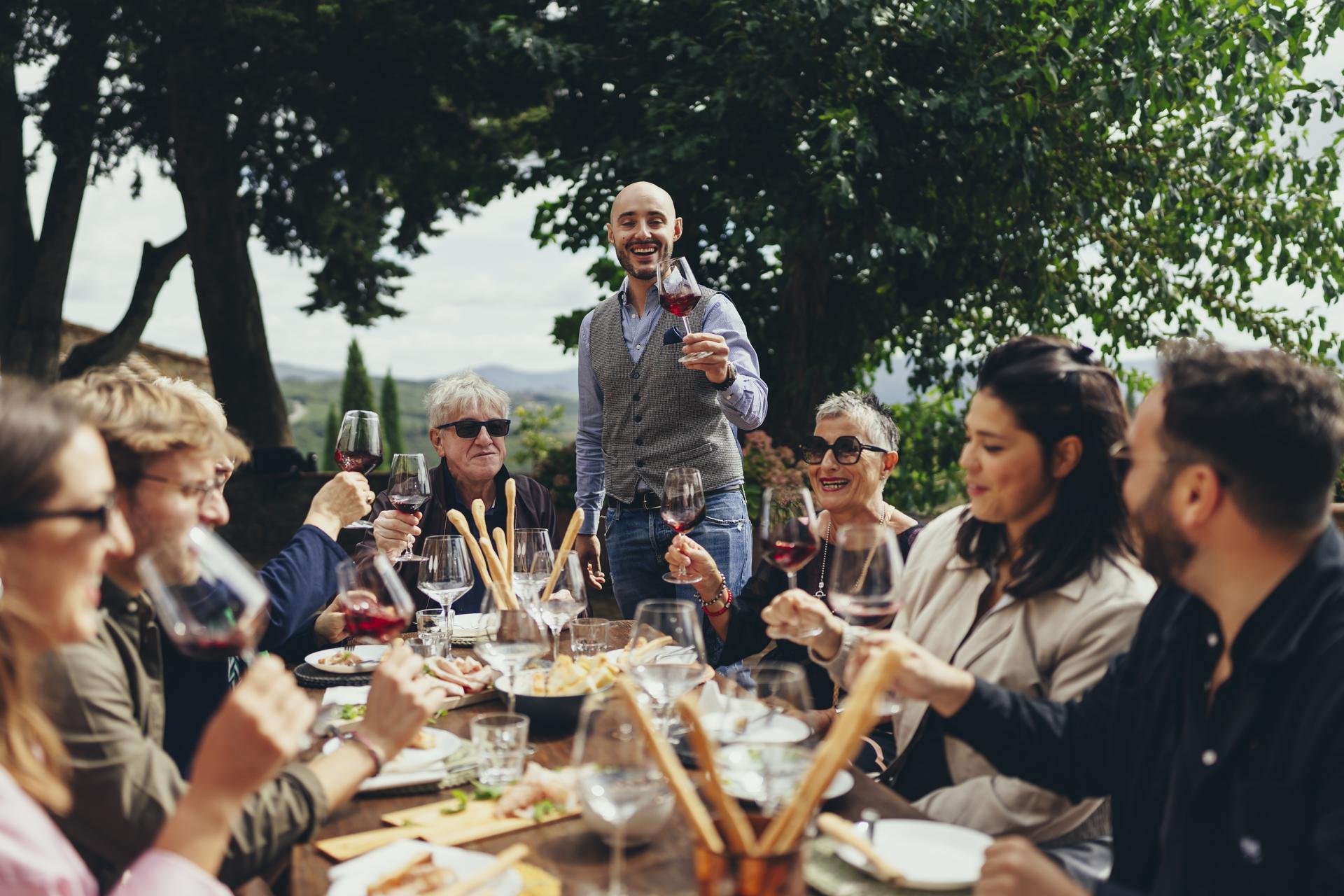
Because of that structure, Brunello wine pairs naturally with rich, traditional Tuscan food: bistecca alla fiorentina, wild boar stews, aged pecorino, and porcini mushroom dishes all stand up well to it. Younger Rosso di Montalcino, with its brighter fruit and softer tannins, is more flexible with lighter fare, from cured meats to simple pasta with tomato sauce. If you visit on a private tour with Your Vino, lunch can be added on request.
Visiting Montalcino
Montalcino itself is a walled hilltop town with sweeping views over the Val d’Orcia and Val di Chiana, and it rewards a slow visit. Beyond the historic fortress and the town’s enoteche, the real draw for wine lovers is the countryside around it, where family estates and larger historic producers sit side by side across very different terrains, some closer to the cooler, higher north side of the appellation, others on the warmer, lower south-facing slopes near Sant’Antimo.
Tasting on location is genuinely the best way to understand how much the zone varies from one side of town to the other, something that’s hard to appreciate from a bottle alone. For a broader look at how Montalcino fits alongside Tuscany’s other wine areas, our complete guide to Tuscan wine is a useful starting point before you plan a trip.
Plan Your Montalcino Visit
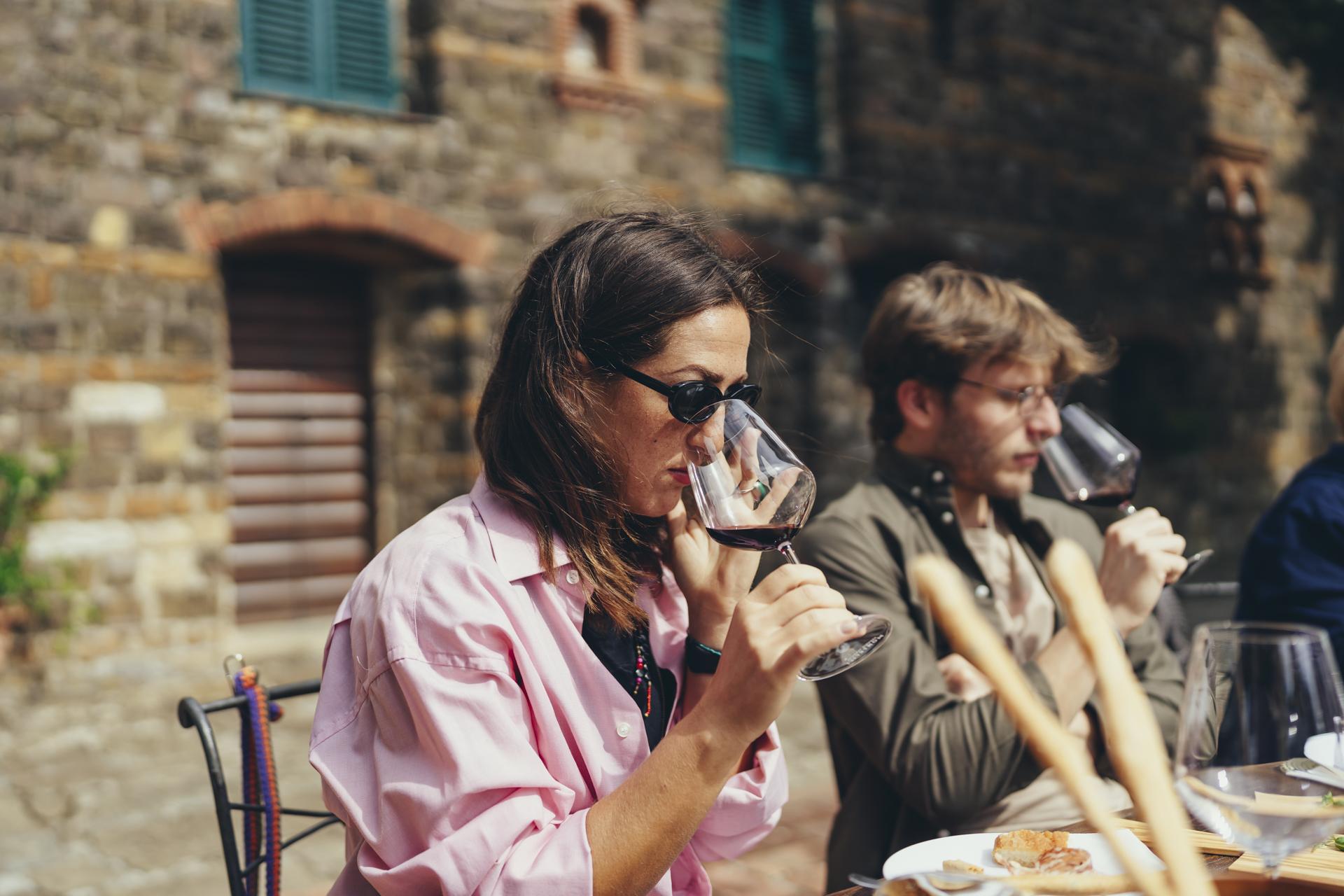
Reading about Brunello di Montalcino only goes so far: tasting it where it’s made, alongside the producers who craft it, is where it really clicks. If you’d like a tailored day exploring Montalcino’s estates at your own pace, our private tours can be built around this exact region, from historic cellars to smaller family-run wineries.
Plan your private Montalcino tour
FAQ
What grape is Brunello di Montalcino made from?
It’s made from 100% Sangiovese, specifically the local strain historically known as “Brunello” within the Montalcino area.
How long does Brunello di Montalcino need to age before release?
By DOCG law, a minimum of five years from the January following harvest, including at least two years in oak. Riserva wines require a minimum of six years.
What’s the difference between Brunello and Rosso di Montalcino?
Both come from the same Sangiovese vineyards in Montalcino, but Rosso is released much sooner and is meant for earlier drinking, while Brunello undergoes the full, longer aging process required by law.
Is Brunello di Montalcino similar to Chianti Classico?
Both are made largely or entirely from Sangiovese, but Montalcino’s warmer, higher, drier climate and stricter aging rules generally give Brunello more structure and aging potential than most Chianti Classico.
How long can Brunello di Montalcino age in the bottle?
Well-made examples from good vintages can continue developing for a decade or more, often gaining complexity in aroma over time.
